Thesis: We live in a time in which society has a craving for diversity and its reflection on the big screen. Although, mainstream media is getting better at depicting a broader range of roles; are we simple getting fed the same “diverse” formula over and over again? If so, what can we actually do about it?
by Esteban Nillo
December 2nd, 2018
SO HERE’S THE CASE…
It’s 2018. Television is moving towards a more reflective society, film is encouraging diversity and mainstream media seems to be fulfilling our craving for a more inclusive industry… or is it?
The fight towards a more diverse media industry isn’t anything new. Film and television have always struggled to reflect what American society truly looks like. While many (including myself) may argue that the representation of many “minorities” still suffers, I became solely interested in doing research on why and how it is there is such a lack of LGBTQ characters because I identify as gay and latino (what seems to be a “double whammy” in Hollywood). I’ve always been aware about the lack of representation regarding gay roles in tv and film. Growing up I remember a total of 0 gay latinos on the big screen or popular television shows. The few gay characters I do remember were either used as punchlines, obvious cliches or heavily stereotyped. What I hadn’t before analyzed was the lack of diversity within the few LGBT characters presented by mainstream media. However, taking a figurative step back to evaluate the media I consume allowed me to realize that the root of these two problems is allowed by only one source, ourselves.
HOORAY FOR DIVERSITY!… WELL NOT REALLY
The range of diverse characters appears to be at an all time high, whether it be certain racial minorities or the depiction of specific communities for the most part it looks like we’re on the path to all sorts of cultural, racial and social exposure. That is until you take a closer look at who is portraying your favorite roles and the significance behind those characters. It wasn’t until a couple weeks back that I began to analyze the roles within some of my favorite movies and shows and began to consider how it was they were contributing to this “wave” of cultural diversity. The truth is most of them weren’t. I gravitate towards watching programs and films that contain gay characters and while I do believe I’ve psychologically trained myself to watch people on screen that I once “craved” to watch growing up, I wasn’t conscious as to why I had continuously been let down by so much of the media I continue to consume. I focus on the representation of LGBTQ+ people because I identify as part of the community and believe that we are currently both under-represented and hugely mis-represented. What used to feel like a step in the right direction now feels like I am being fed a quota by industries meeting a “diversity bare minimum”.
So why do the few gay characters who make it on screen bore me rather than have me cheering?
Well, for one, the majority of them are playing the same role and two, they all look the same!

THE GLAAD STUDY
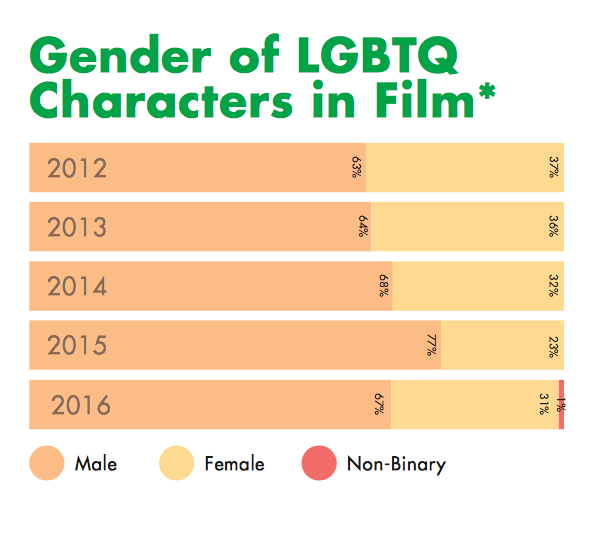
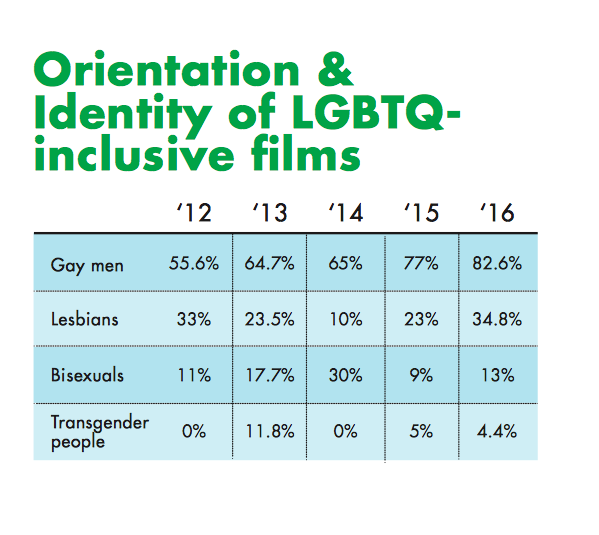
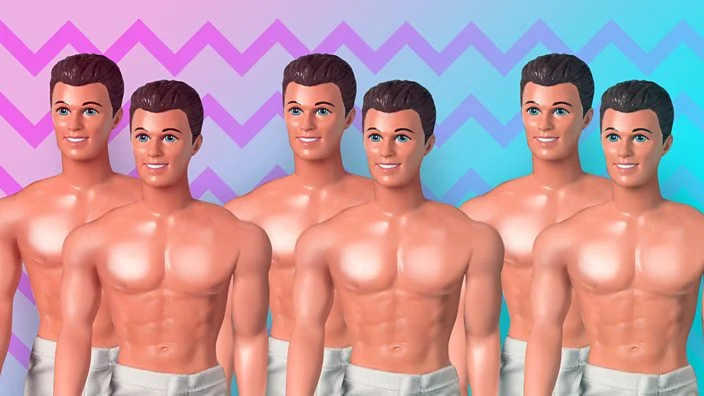
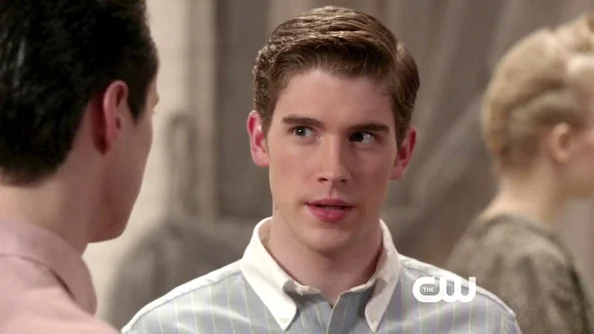
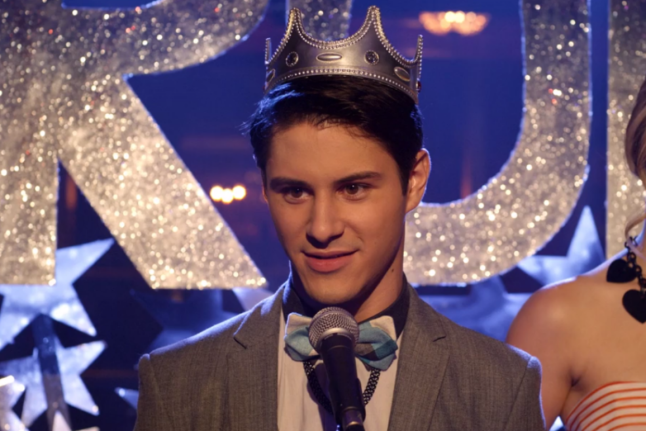
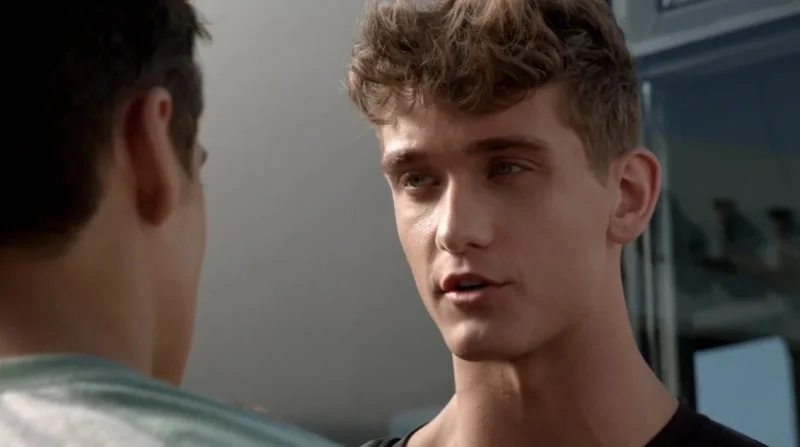
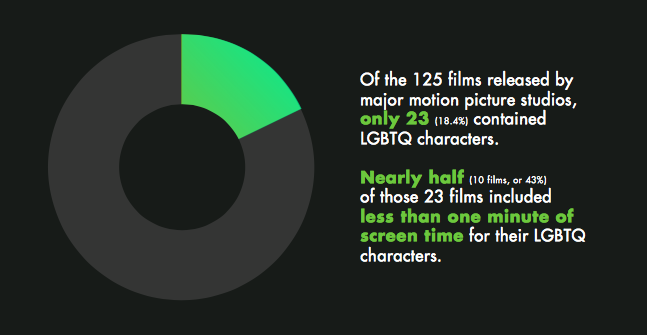
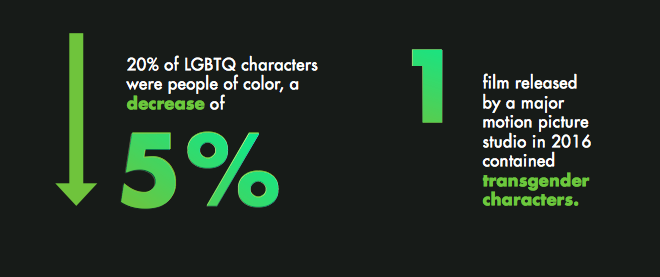
The battle towards inclusivity however doesn’t end there. Apart from it being “difficult" to add an openly queer role onto a prime television sitcom or major film, when mainstream media does include an LGBT character that role is very likely given to a younger white male portraying a gay man. According to GLAAD’s Studio Responsibility Index, only 18.4% of major motion pictures contained LGBTQ roles in 2016, of those 23 films, nearly 70% were white characters. While this statistic was not at all shocking to me, the following were, GLAAD (charts above) concludes that 82% of the orientation and/or identity of LGBTQ inclusive films relied on the portrayal of a gay male and as for the racial diversity of those “queer-friendly” film’s characters only an estimated 31.4% were anything other than white. Meaning that the chances of me running into a 2016 major motion picture with a gay latino character is just below 1 out of 125 or about .08%. Carson Cook’s A content analysis of LGBT representation on broadcast and streaming television, adds that, “Representation of bisexual and transgender characters still lags behind lesbians and gay men in some ways and that overall there is more LGBT representation on streaming platforms than on broadcast television” (Cook, C). Leaving television networks and the film industry to get as diverse as the slideshow to the right, not all that inclusive, huh?
To be clear, there are two major problems here. One: out of the few LGBT roles that there are, the majority of these characters are written to identify as gay. Two, the few minimal queer roles that are depicted by major motion picture studios lack racial variety. This leaves me to wonder if overall society isn’t actually ready to digest a character with more than one social “downfall”, One being their sexuality and another being considered a racial minority. However, what seems like a more reasonable explanation as to why major television networks and mainstream films continue to feed us this one-sided heavily stereotyped gay male character is the fact that we as daily viewers, movie goers and consumers continue to be content with the fact that some sort of “effort” has been made towards including someone diverse. The question in mind then becomes whether these industries are actually making strides towards incorporating a variety of LGBT+ characters or if they’re just relying on the fact that consumers like myself continue to support by viewing films and tv shows with weak attempts at expanding cultural and social diversity.
On top of having what seems like a minimal amount of non-heterosexual roles, the reality of it is, the LBTQ+ side of the community suffers even greater from mainstream inclusivity. Lesbian, bisexual and transgender characters make up only a small fraction of the LGBT roles pushed forward. According to GLAAD’s Where we are on tv : 2017-2018, “Bisexual characters make up 28 percent of the LGBTQ characters tracked across all platforms”, this is an incredibly small number considering only 6.4% of primetime scripted broadcast television is even considered LGBTQ. GLAAD’s index continues by stating that across cable tv, broadcast television and streaming services “there are [only] 17 regular and recurring transgender characters” and "for the first time since GLAAD has started this report, there are asexual characters counted. Cable and streaming each include one asexual character.” While these statistics may not sound like anything but numbers to anyone who doesn’t identify as part of the LGBTQ+ community. From someone who does, I can truthfully say that growing up I always had a craving for the society I lived in to be reflected on screen whether that be physically or “psychologically”. The power both television and film have to recognize and include characters of different sexual orientations also contains the ability to impact those watching and/or expose this community to parts of the world who maybe don’t see any side of LGBT culture. “Entertainment has the unparalleled opportunity to connect with people in their living rooms. These stories allow audiences to find their shared experiences among people with whom they might have previously believed themselves to have nothing in common”,writes Sarah Kate Ellis, President and CEO at GLAAD. While I can go on about how representation mattered growing up, I’m now more than ever focused on why it is it matters now and how it is I, the consumer, has the ability to shape an industry that hardly seems to be making any effort to fully accept and incorporate LGBTQ people.



IN CONCLUSION
SURPRISE!
“The fight for equitable, proper media representation for queer people is an endless one”, notes Jill Gutowitz as she writes on why LGBTQ Representation on TV Still sucks. She continues by stating that, “Even with the rise in representation we’ve seen in the last decade, many queer characters on TV often fall victim to stereotypes and tropes” (Gutowitz, J.). I agree, the fight towards having enough let alone decent LGBT roles continues to struggle. Especially when society continues to accept characters whom essentially symbolize a punchline, constantly being used for their comedic relief or shock value rather than complexity.
In The Media Representation of Fictional Gay and Lesbian Characters on Television, Ray Seif builds on the issue of the heteronormative approach television networks choose to go about portraying gay characters. Explaining that, “Programs constantly show that heterosexuality is the prevailing standard and that people that do not adapt to this heteronormative morale are regarded as eccentric and do not fit in American society” (Seif, R.). This concept comes as no surprise to me, even as a kid I was made aware by brutal language or physical comedy that being gay wasn’t the “norm” and gay characters were never the real focal point. What makes these (predominately white) gay men so hard to watch isn’t just knowing that they’re incredibly likely to be shifted away from focus. It’s the fact that their portrayal usually involves reinforcing a stigma or stereotype already difficult to combat within the LGBT+ community.
Newsweek (video to the left) exemplifies this argument by exposing some of the most popular gay male cliches in Hollywood, some of which include being extremely feminine, dramatic or sexually frustrated. As for on-screen lesbian women, Seif argues that characters “are often depicted as rough, having masculine gestures, short hair, wearing baggy clothes, and playing (masculine) sports” (Seif, R). Though, these interpretations may be spot on for some, they are definitely not accurate for everyone whose sexual orientation is anything but straight. The problem following this misrepresentation isn’t just the thousands of people incapable of relating to a character essentially mocked by media, it’s also the experience of having that one character closest to your sexual identity continuously being physically attacked or psychologically harmed. These characters are overplayed and usually exaggerated in order to add to their comedic value. The “gay best friend” role is one that personally bothers me because it upholds a lot of stigmas made about gay men and women. The “gay best friend” in a film is usually portrayed by a white male amongst a large group of women whom are in constant need for a “support” system. This role heavily emphasizes a gay male's love for fashion, feminine mannerisms and high pitched voice. Also illustrating the harmful pattern Hollywood goes about broadcasting gay people through film and television is GLAAD’s compilation (video to the left) of major motion pictures’ comedy, at the LGBT community’s expense. Films within this video are no older than eight years old from their release, proving that derogative and harmful language against lesbian and gay people is still a huge part of Hollywood. What to many may be a meaningless word or a funny joke can be a hurtful term or discomforting experience to those who do identify as LGBT+. Using words like homo, fag and tranny as punchlines or insults has the ability to relay a discouraging message onto those who fall victim to the derogatory vocabulary in real life. Leaving myself to wonder why it is mainstream media continues to use such cruel physical and vocal depictions against gay, lesbian and transgender people. While many may consider the simple act of having an openly gay or lesbian person on screen as an accomplishment, the truth is we as a society have the ability to push forward a more intricate LGBT role, one whose sexual orientation isn’t constantly being brought up or made the most interesting thing about them.

GAY FOR PAY?
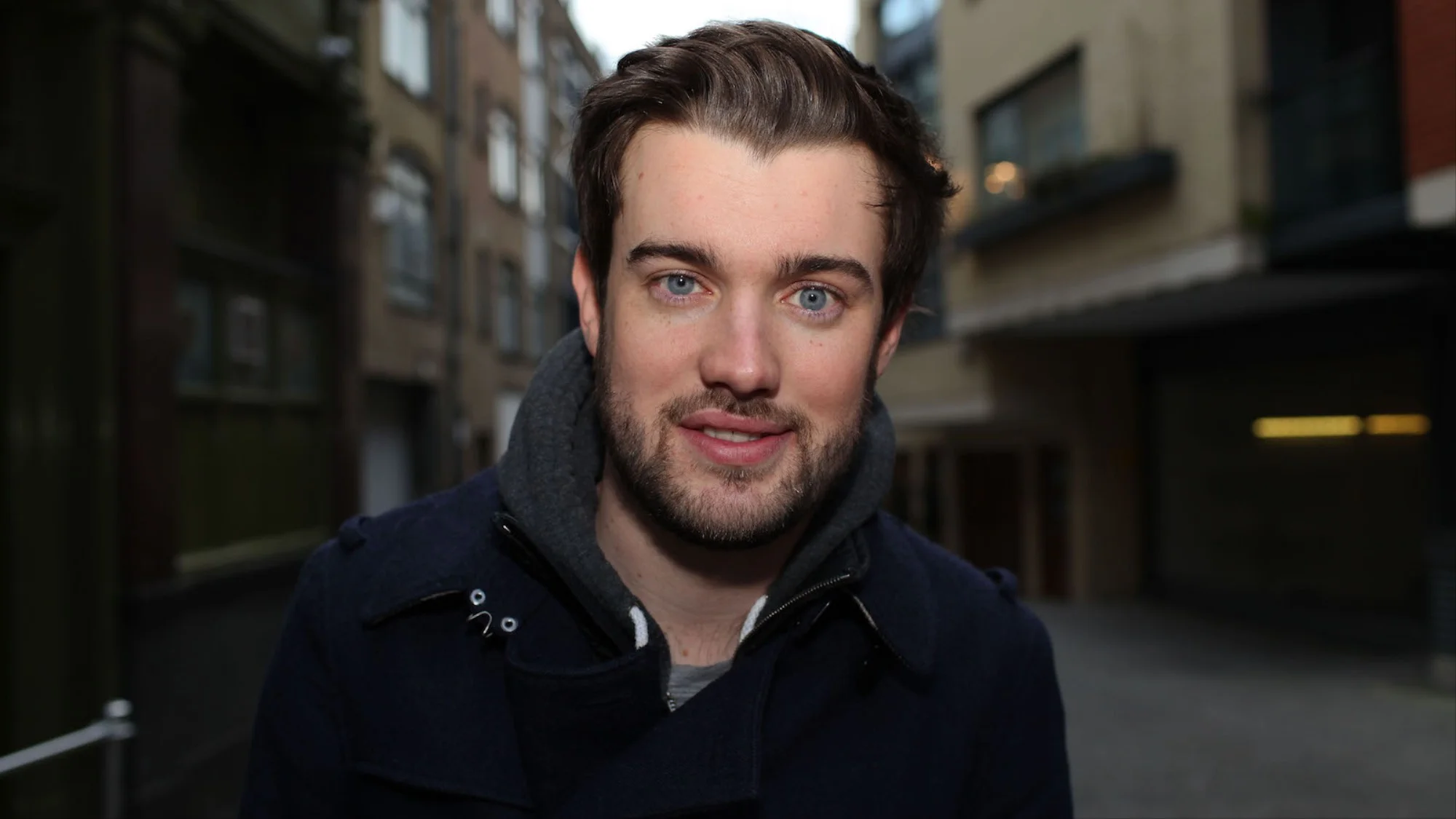
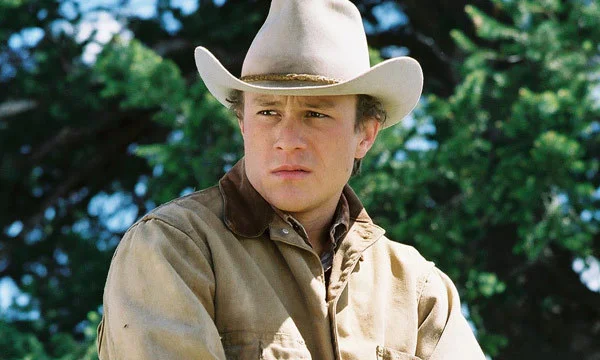
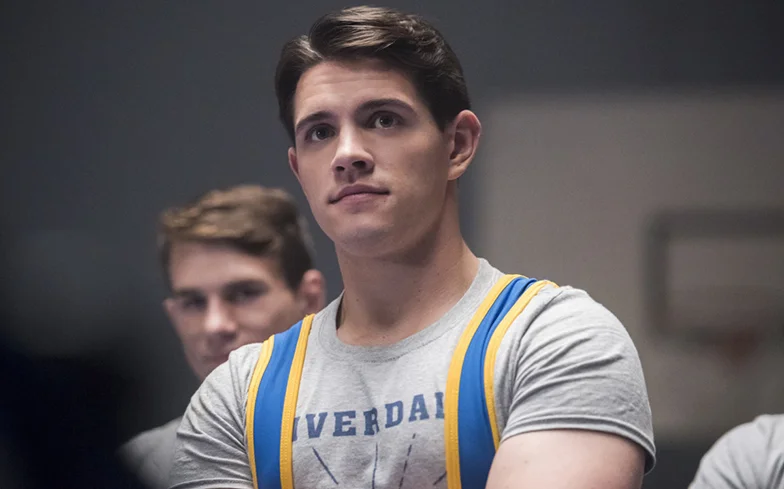
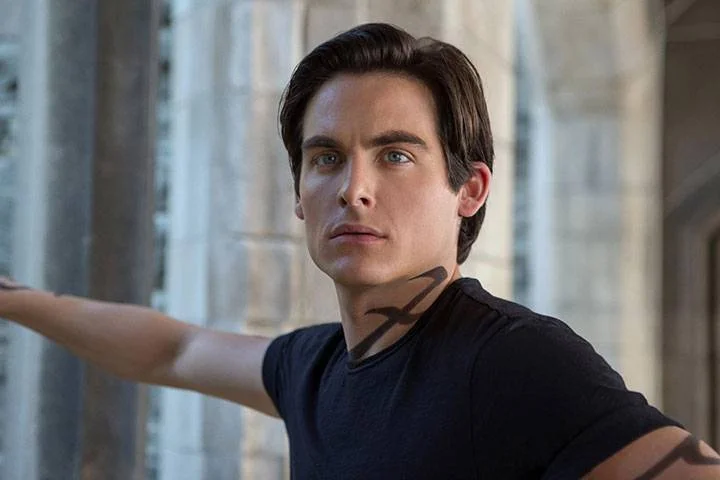
And guess what, out of the few queer characters that do make it onto mainstream media… Most of them are portrayed by straight people! Yet another problem because the opportunity for an LGBT person to play an LGBT character is stripped away from them when in reality, they’re likely to know best what it means to portray that specific role at its full potential. While many may argue that the portrayal of these roles should not hold an importance as to who it is actually plays them, I disagree. I strongly feel that gay people on screen should primarily be played by those whom genuinely identify with the character in real life because they hold experiences and certain emotions that have only been dealt in regard to their sexuality. And while I truly believe this, I take a look at some of my favorite films and the type of media i’m supporting and realize it doesn’t back up what I have explained. For example, the gay-themed film Call Me By Your Name (2017), which undoubtedly is one of my all time favorite movies, has not one but two gay characters portrayed by (none other than) straight white men. While at first having no opinion over who portrayed these two roles, I stop to think now, after the research I’ve done over the past few weeks and think, are these films casting straight white people in an effort to make the movies commercially successful and/or is it because mass audiences are simply incapable of accepting that the sexual orientation of someone onscreen is actually the person’s reality.
SO THEN… WHAT DO I WATCH NOW?